
"coffee screen size"
2000 article(s) found

Kenyan Kenya AA Coffee Kenyan Coffee beans mocha Coffee
This classification method is based on a variety of perforated screen classification, the screen has a variety of specifications, identified by the number, the number is associated with the mesh. The size of the mesh-1 stroke 64 inches is the unit of calculation. If the diameter of the mesh is 18 stroke 64 inches, the number of the screen is 18; if the diameter of the mesh is 17 inch 64 inches, the number of the screen is 17. And so on, there are 19, 16, 15, 1

Description of the flavor of washed Tanzanian coffee introduction to the characteristics of fine coffee in the roasting area
The coffee beans are of extraordinary quality and are produced in the Mohi district near Mount Kilimanjaro. The mountain area with a height of 3,000 to 6,000 feet is the most suitable area for growing coffee. Fertile volcanic ash gives the coffee here a strong texture and soft acidity. It exudes delicate aromas and contains aromas of wine and fruit, giving people an aftertaste.

Introduction to the smooth and gentle Tanzania boutique Kilimanjaro Coffee Kilimanjaro Mountain Fire area
Tanzanian coffee is mostly washed. After picking, coffee farmers will send the coffee fruit to the nearest processing plant for processing. The treatment step of the water washing method is to screen and remove the impurities in the coffee fruit, then remove the coffee pulp and exocarp, send it into the fermentation tank, and remove the pectin layer from the inner pericarp by fermentation. Clean

What are the categories of Robusta coffee beans
Following Cafe (official account vdailycom of Wechat) found that Beautiful Cafe opened a small shop of its own. In fact, Robusta also falls into many categories and can't generalize or pursue price blindly. Among the big coffee countries, Robusta is a major producer of Vietnam, Brazil, Indonesia, India and so on. Like Arabica, Robusta in each country has a corresponding hierarchy.

Introduction to the method of describing the Flavor and Grinding degree of Tanzania Coffee
Tanzanian coffee is mostly washed. After picking, coffee farmers will send the coffee fruit to the nearest processing plant for processing. The treatment step of the water washing method is to screen and remove the impurities in the coffee fruit, then remove the coffee pulp and exocarp, send it into the fermentation tank, and remove the pectin layer from the inner pericarp by fermentation. Clean

Baking tips: how to easily screen residual beans
I saw on the Internet yesterday that someone asked if the vibrating screen could screen peanuts and coffee beans, and the answer was yes. In the following, some problems and solutions of vibrating screen in screening these two materials are discussed. First of all, customers need to know the number of peanuts and coffee beans, and then choose the appropriate sieve, which is like screening peanut and coffee beans. Its
Encyclopedia of Coffee talking about individual Coffee
Today, I casually typed individual coffee on Baidu, and the results are as follows: single coffee is made from single coffee beans produced in the country of origin, and pure coffee is usually drunk without milk or sugar. Have strong characteristics, special taste: or fresh and soft, or mellow smooth; the cost is higher, so the price is more expensive. For example, the famous Blue Mountain Coffee and Brazilian Coffee

The concept of Fine Coffee Specialty Coffee (1) the third Wave of Coffee Culture and History in the World
The traditional classification of coffee beans is usually based on the classification criteria defined by the coffee producing countries, and then agreed to become common in the international market and traded under such a tacit understanding. For a long time, coffee producing countries have their own classification and evaluation criteria for coffee, which serve as the pricing guidelines in the coffee market. But slowly in recent years, coffee consuming countries have begun to demand unified evaluation criteria.
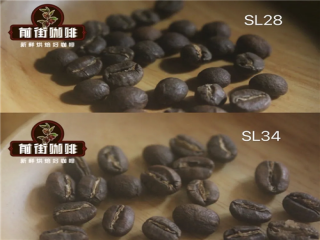
Kenyan coffee beans | introduction of Kenyan boutique coffee beans production areas. What is the difference between K72 treatment and universal treatment?
The flavor of coffee is inseparable from the soil in which it grows. Bright sour has always been the regional flavor of Kenyan coffee, although its coffee industry was introduced during the British rule in the 20th century, and its goal of high-quality products has led to a rapid increase in its development speed and market popularity. The British stayed from France in 1883

A brief introduction to the History and Culture of the Origin and Development of the aromatic Coffee Manor in Arusha, Tanzania
It is said that the earliest Arabica coffee in Tanzania was introduced by Christians from Kenya and is similar to Kenya in flavor characteristics. With grapefruit aromas and soft and bright acidity. However, because the economic conditions of Tanzania are worse than those of Kenya, the production conditions are poor. Tanzania's quality control is not strict enough, which destroys the coffee in many processing links.

Introduction of bourbon species of coffee beans washed by Kilimanjaro, Tanzania
Tanzanian coffee is mostly washed. After picking, coffee farmers will send the coffee fruit to the nearest processing plant for processing. The treatment step of the water washing method is to screen and remove the impurities in the coffee fruit, then remove the coffee pulp and exocarp, send it into the fermentation tank, and remove the pectin layer from the inner pericarp by fermentation. Clean

Kilimanjaro Coffee roasting degree Fine Coffee Flavor taste description Manor introduction
Tanzanian coffee is mostly washed. After picking, coffee farmers will send the coffee fruit to the nearest processing plant for processing. The treatment step of the water washing method is to screen and remove the impurities in the coffee fruit, then remove the coffee pulp and exocarp, send it into the fermentation tank, and remove the pectin layer from the inner pericarp by fermentation. Clean

Description of coffee flavor in Kilimanjaro, Tanzania introduction to the treatment of grinding degree and baking degree
Tanzania is an East African country south of the equator, bordered by Uganda and Kenya to the north and the Republic of the Congo, Rwanda and Burundi to the west. It is hot and humid all the year round, with an average temperature of 21-25 ℃ in most areas. Precipitation is divided into long and short rainy seasons, and the annual precipitation is abundant. The economy is based on agriculture, coffee is one of the main cash crops in Tanzania, in Tanzania, Arabica coffee

Introduction to the process of growing, harvesting, processing and processing of coffee beans
The method of picking coffee beans is to spread the coffee cherries widely on the exposure field for two weeks and sweep them with a rake several times a day so that the coffee beans can be dried more evenly. When dried, the coffee beans are separated from the skin, and the dried pulp and peel are removed by a sheller, then screened and divided into different grades. The best quality coffee can be produced by washing or drying.

Introduction of high-quality coffee beans in Tanzania coffee flavor and taste areas treated with water
Tanzanian coffee is mostly washed. After picking, coffee farmers will send the coffee fruit to the nearest processing plant for processing. The treatment step of the water washing method is to screen and remove the impurities in the coffee fruit, then remove the coffee pulp and exocarp, send it into the fermentation tank, and remove the pectin layer from the inner pericarp by fermentation. Clean

What is the grade of Banwei Manor coffee beans in Kenya (Benvar)? How to rush [Banwei, Kenya]
Professional coffee knowledge exchange more coffee bean information please follow the coffee workshop (Wechat official account cafe_style) Kenya (Benvar) Banwei Manor coffee beans what grade? How to wash [Kenya Banwei] washing beans is not sour? Located in Kenya below the equator of East Africa, the coffee beans planted are high-quality Arabica beans with thick and round meat.
Read the article and feel the coffee trip in Uganda. Uganda coffee brands have the best AA grade.
Professional coffee knowledge exchange more coffee bean information please follow the coffee workshop (Wechat official account cafe_style) front street-Uganda coffee introduction opens the global coffee production area map, today the official account will take you to the interior of Africa in Uganda, a taste of its northeast Elgon mountains of quality coffee, compared to we are familiar with Ethiopia, Ugandan coffee is

Classification and classification of coffee beans | meaning of the name of coffee
For more information on coffee beans, please follow the coffee workshop (Wechat official account cafe_style)-- how coffee is named-- G1, G2, G3, G4, AA, PB, SHB, SHG, EP, PLANTATION. Have you ever wondered what the difference is? Are you curious about what they are referring to? Today we are going to start talking about what we usually buy

A brief introduction to the producing area of Jamaica Blue Mountain Grade 1 Coffee and the grading of raw beans and raw beans in Jamaica Blue Mountain Garden
Jamaica Blue Mountain Mavis bank Grade 1 raw beans. Because of its superior geographical and climatic conditions, Blue Mountain Coffee is superior to others in taste and aroma. The unique flavor of Jamaica Blue Mountain Mavis bank Grade 1 raw bean Blue Mountain Coffee is related to the geographical location and climatic conditions of the Blue Mountain. Generally speaking, south of the Tropic of Cancer and north of the Tropic of Cancer, this area

Coffee grading knowledge how to classify coffee grades
If the owners of two cafes are discussing, shopkeeper A says, "the coffee beans we use in our shop are NO.2 in Santos, Brazil. What about your store?" shopkeeper B said: our store uses Brazilian NO.1 of the same grade as Blue Mountain NO.1. The evaluation method adopted in Brazil is the deduction method, which is classified according to the number of defective beans per 300g of staple beans, with a total of seven grades from NO.2 to No.8, with a deduction of less than 4 points.